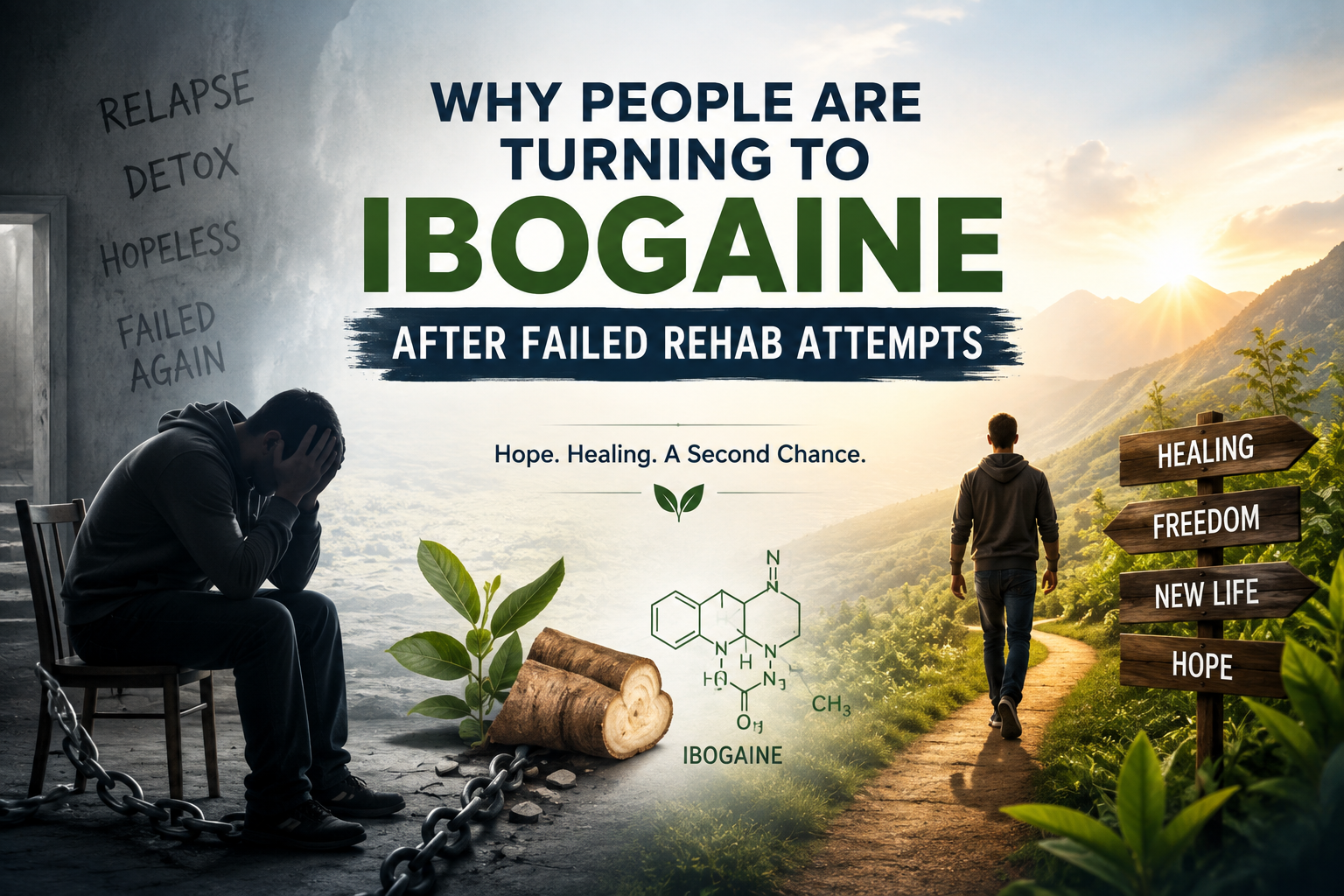
Why People Are Turning to Ibogaine After Failed Rehab Attempts
For someone who has been through rehab once, twice, or even five times, the word “relapse” starts to feel less like a setback and more like a pattern. It’s this exhaustion — the sense that conventional treatment keeps circling back to the same result — that’s pushing a growing number of people toward ibogaine, a plant-derived psychoactive compound most had never heard of a decade ago. Understanding why this shift is happening, and what it actually involves, matters for anyone weighing their options after standard rehab hasn’t worked.
The Frustration Behind the Search
Traditional addiction treatment programs are built around detox, therapy, and often long-term medication support. For plenty of people, that combination works. But for others, especially those dealing with opioid dependence, the cycle of detox, relapse, and re-admission can repeat for years. Each failed attempt wears down the person’s belief that recovery is even possible. It wears down their trust in the system too, since the same programs keep producing the same disappointing outcome.
This is the backdrop against which ibogaine has gained attention. It’s derived from the root bark of Tabernanthe iboga, a shrub native to Central Africa, and has been used there in ceremonial contexts for generations. In the addiction recovery world, it’s known for something fairly unusual: some users report that a single ibogaine session dramatically reduces opioid withdrawal symptoms and cravings, in a way that feels different from anything else they’ve tried. For someone who has sat through multiple failed rehab attempts, that kind of claim is naturally going to be appealing.
What the Research Actually Shows
It’s worth being upfront here — the evidence on ibogaine is promising but far from settled. Observational studies, case series, and a handful of small controlled trials suggest it can meaningfully ease opioid and cocaine withdrawal, likely through its metabolite noribogaine, which stays active in the body for several days after treatment. That extended action may explain why some people describe feeling a lasting reduction in cravings rather than a brief window of relief.
At the same time, researchers are careful to note that large-scale, rigorously controlled trials are still lacking. Much of what we know comes from clinics operating outside the United States, where ibogaine remains a Schedule I substance and is not legal to administer. That legal status alone drives a lot of the current landscape: people frustrated with failed rehab attempts at home are traveling abroad, to countries like Mexico or parts of Europe, specifically to access ibogaine-assisted treatment.
The Risk That Can’t Be Glossed Over
Here’s the part that responsible coverage of this topic can’t skip. Ibogaine carries a real and well-documented cardiac risk. The compound blocks potassium channels in the heart, and that disruption can lead to a condition called QT prolongation. Doctors have linked it to fatal arrhythmias in people who had no prior heart problems at all. What’s unsettling is that these events show up at standard therapeutic doses. This isn’t only a misuse or overdose issue.
This isn’t a rare footnote; it’s the primary reason ibogaine hasn’t received regulatory approval anywhere in the world for medical use. Reputable clinics that do offer it require a pre-treatment ECG, continuous cardiac monitoring throughout the session, and immediate access to emergency equipment — because the risk of complications is real enough to warrant that level of precaution. Some published estimates place the number of ibogaine-related deaths in the dozens over recent decades, a figure tied closely to unsupervised or poorly screened administration.
There’s also the psychological dimension. An ibogaine session isn’t a quick fix — the experience itself typically lasts between 24 and 36 hours, involving vivid, dream-like states that many describe as an intense “life review.” For people with underlying mental health conditions, this can be destabilizing rather than clarifying, which is why thorough psychiatric screening is just as important as cardiac screening before anyone considers it.
Why the Appeal Persists Anyway
Given all that, why does interest keep growing? Part of it comes down to how addiction recovery is usually framed — as a long, incremental process requiring ongoing willpower and multiple attempts. For someone who has tried that path repeatedly without lasting success, the idea of a treatment that works differently, and potentially faster, is genuinely compelling. It’s not that people turning to ibogaine are ignoring the risks; many have simply reached a point where the risks of continued addiction feel just as serious, if not more so.
There’s also a community element. Online forums and recovery groups are full of first-person accounts from people who felt let down by conventional rehab and found something in ibogaine treatment that resonated — whether that’s the intensity of the psychological experience, the reduction in withdrawal symptoms, or simply a sense of being taken seriously after years of feeling stuck. These stories spread, and for people running out of other options, they carry real weight.
What This Means for Anyone Considering It
If you or someone you know is thinking about ibogaine after failed rehab attempts, the most important step is separating the genuine therapeutic potential from the very real danger of unregulated administration. Not every clinic offering ibogaine treatment follows proper cardiac and psychiatric screening protocols, and the difference between a well-run program and an unsafe one can be life or death. Anyone exploring this route should look closely at a clinic’s medical staffing, monitoring equipment, and screening process before making a decision — and should loop in a physician who knows their full medical history, particularly anything related to heart health.
Ibogaine sits at an unusual crossroads right now: genuinely interesting as a subject of ongoing clinical research, and genuinely risky as an unregulated treatment being sought out by people who feel they’ve run out of other choices. That tension is exactly why the conversation around it keeps growing, and why it deserves a level-headed look rather than either dismissal or blind enthusiasm.
This article is for informational purposes only and isn’t medical advice. If you’re navigating addiction recovery, please talk to a licensed healthcare provider or addiction specialist about what’s appropriate for your situation.