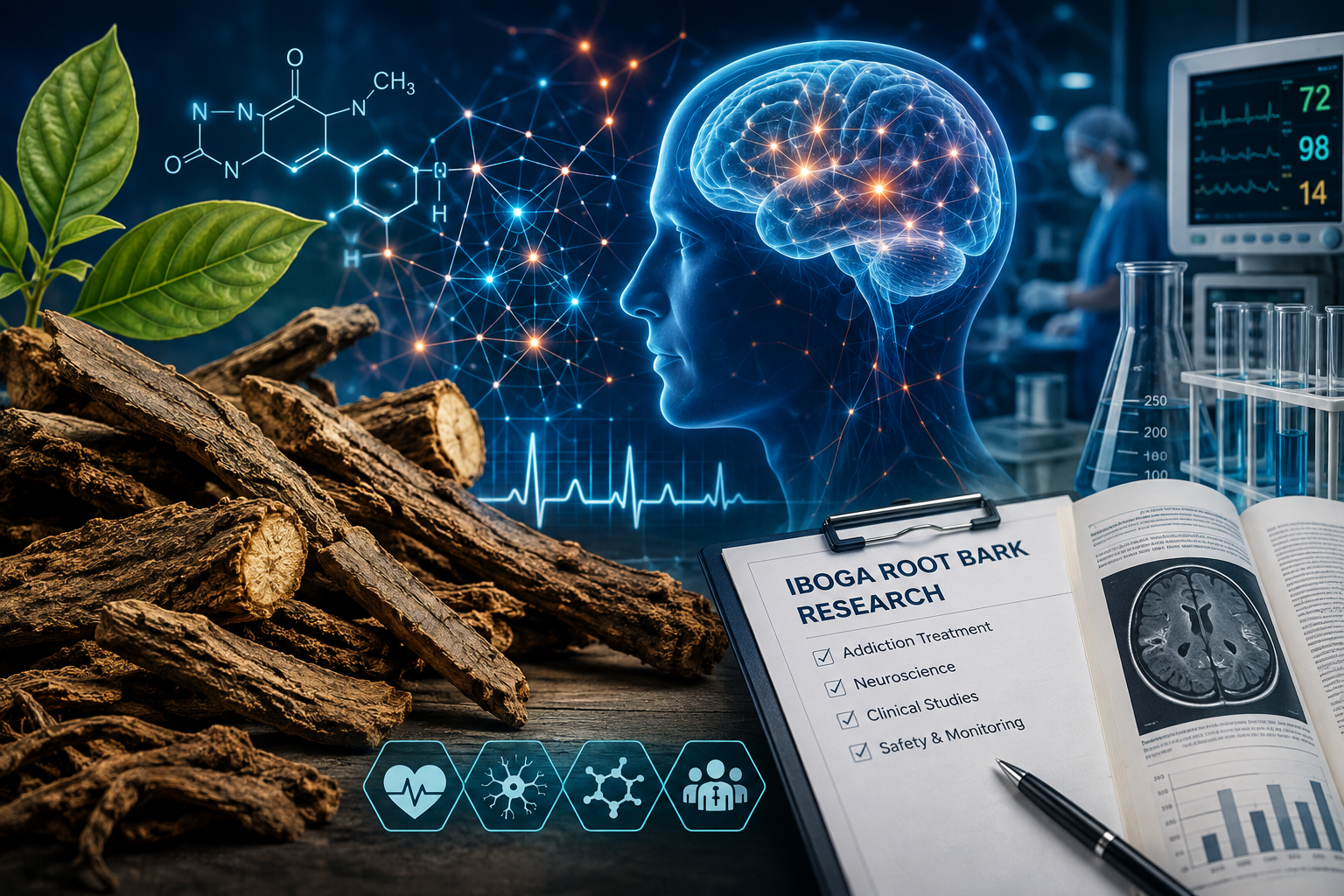
What Leading Addiction Medicine Experts and Current Research Say About Iboga Root Bark
For decades, iboga root bark sat on the fringes of medicine, known mostly through stories from the Bwiti spiritual tradition of Central Africa and whispered accounts from people who’d tried everything else to break free of addiction. That’s changing fast. Addiction medicine researchers, neuroscientists, and even state lawmakers are now paying close attention to iboga root bark and its primary alkaloid, ibogaine, as a possible answer to one of the hardest problems in modern healthcare: substance use disorder that doesn’t respond to standard treatment.
This shift isn’t hype. It’s backed by a growing body of published research, real funding commitments, and cautious but genuine interest from clinicians who spend their careers treating addiction. Here’s what’s actually known, what remains uncertain, and why iboga root bark keeps coming up in conversations about the future of addiction care.
- Growing scientific interest in iboga root bark for addiction treatment.
- Research focuses on opioid dependence, PTSD, depression, and substance use disorder.
- Safety requires medical supervision and cardiac monitoring.
- Clinical research and funding continue to expand worldwide.
Why Researchers Are Revisiting Iboga Root Bark
Substance use disorder remains a massive public health burden, contributing to hundreds of thousands of deaths worldwide each year, most tied to opioids. Existing treatments like methadone and buprenorphine help many people, but they don’t work for everyone, and relapse rates stay stubbornly high. That gap is a big reason iboga root bark has drawn fresh scientific attention.
Unlike conventional addiction medications, which typically target a single neurotransmitter pathway, ibogaine appears to act on multiple systems at once, including glutamate signaling and dopamine regulation. Researchers studying substance use disorder have long argued that addiction is a multi-system problem, so a compound that touches several of those systems together is scientifically interesting even before you get to the clinical results.
- Multi-target mechanism of action.
- Potential benefits beyond opioid addiction.
- Addresses limitations of current treatment options.
- Growing clinical and academic research support.
What the Studies Are Actually Showing
One of the most talked-about pieces of research came out of Stanford Medicine, where a study on military veterans found meaningful reductions in symptoms tied to PTSD, depression, and opioid withdrawal after a supervised ibogaine treatment. The sample size was small, just a few dozen participants, so nobody in the scientific community is calling it definitive proof. But for a compound that’s been mostly studied through anecdotal reports and small open-label trials, it was a notable step toward the kind of rigorous evidence regulators expect to see.
A broader scoping review published in early 2026 in the journal Molecules pulled together decades of research on iboga root bark and ibogaine, from early pharmacological studies in the 1990s through the most recent clinical work. The review’s authors described real therapeutic potential for reducing opioid dependence, while also being blunt about the safety gaps that still need to be addressed before ibogaine could become a mainstream treatment option.
Separately, scientists at UC San Francisco, working alongside teams from Yale and Duke, used ibogaine’s pharmacology as a blueprint to design entirely new drug candidates. Rather than using the plant compound directly, they screened millions of molecular structures to find ones that mimic ibogaine’s effect on the serotonin transporter, the same target used by common antidepressants. Early results in animal models showed reduced symptoms of both addiction and depression at very low doses, which suggests the underlying biology behind iboga root bark could eventually be delivered through safer, more targeted medications.
- Stanford Medicine reported encouraging early clinical outcomes.
- The Molecules review summarized decades of ibogaine research.
- UC San Francisco, Yale, and Duke are developing safer drug alternatives inspired by ibogaine.
- Animal studies indicate possible benefits for addiction and depression.
The Safety Conversation Nobody Skips
Ask any addiction medicine specialist about iboga root bark and the conversation quickly turns to cardiac safety. Ibogaine can affect heart rhythm, specifically something called the QT interval, and that risk is well documented. Nearly all of the serious adverse events and deaths linked to ibogaine use happened in unsupervised or unregulated settings, without cardiac screening, ECG monitoring, or trained medical staff present.
In contrast, monitored clinical research involving close to 200 patients found that heart rhythm changes returned to normal and no deaths occurred when proper cardiac monitoring protocols were followed. The takeaway experts consistently point to isn’t that iboga root bark is inherently too dangerous to study, it’s that it demands the same level of medical oversight as any other powerful pharmacological intervention. Treatment without qualified supervision carries real risk, and no credible researcher or clinician recommends otherwise.
- Cardiac screening is essential before treatment.
- ECG monitoring helps reduce medical risks.
- Professional supervision is strongly recommended.
- Unregulated treatment settings carry significant dangers.
Legal Status and Where the Money Is Going
In the United States, ibogaine remains a Schedule I controlled substance, which has historically made large-scale clinical trials difficult and expensive to run. That’s part of why so much of the existing research has come out of countries like Mexico and New Zealand, where iboga root bark treatment operates in a different regulatory environment.
That said, the funding landscape is shifting. Texas allocated a substantial sum toward clinical trials for ibogaine-based treatment, and additional federal matching funds have followed, signaling that lawmakers see enough promise to justify serious scientific investment. Several other states have introduced legislation aimed at supporting further research into iboga-derived therapies for opioid and stimulant addiction.
- More government funding for ibogaine research.
- Expanding clinical trial initiatives.
- Growing legislative interest in addiction therapies.
- International collaboration on safer treatment options.
A Cautious, Evolving Picture
If there’s one thing addiction medicine experts agree on, it’s that iboga root bark isn’t a miracle cure and it isn’t a fringe curiosity either. It sits somewhere in between: a compound with a genuinely interesting pharmacological profile, some encouraging early clinical data, and safety concerns that are well understood but not yet fully solved.
The honest answer to “does iboga root bark work for addiction” is that the science isn’t finished yet. Most current data comes from open-label studies and observational reports rather than the large randomized controlled trials the FDA typically requires before approving a new treatment. What’s changed recently is the scale of interest, funding, and institutional research now aimed at closing that evidence gap.
For anyone exploring iboga root bark as a potential treatment path, the consistent advice from addiction specialists is straightforward: this is not something to approach without medical supervision, cardiac screening, and guidance from professionals experienced in addiction treatment. As research continues, iboga root bark may end up shaping the next generation of addiction medicine, whether that’s through the plant compound itself or the new drugs it’s inspiring.
Current research suggests that iboga root bark has significant scientific potential for treating addiction and related mental health conditions, but experts consistently emphasize that more large-scale clinical trials are needed. Until then, any use of ibogaine should occur only under qualified medical supervision with appropriate cardiac monitoring and comprehensive addiction care.