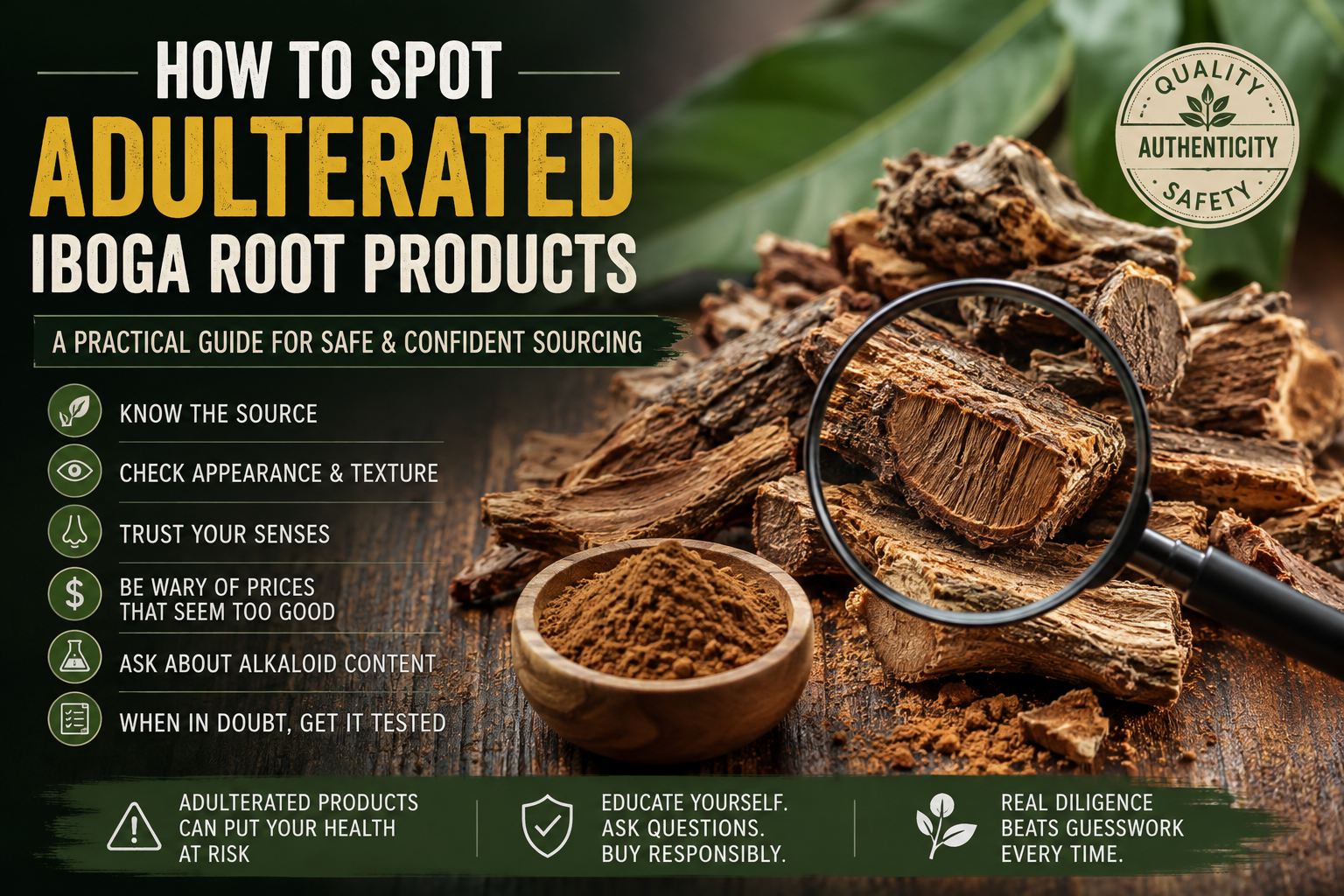
How to Spot Adulterated Iboga Root Products
Iboga root has earned a reputation as one of the most potent plant medicines on earth, prized for its role in traditional Bwiti ceremonies and, more recently, in addiction interruption protocols. That reputation comes at a cost. As demand has grown outside Central Africa, so has the supply of poor-quality and outright fake material. If you’re sourcing this root for personal or clinical use, knowing how to tell the real thing from a diluted or contaminated batch isn’t optional — it’s a safety issue.
This guide walks through the practical warning signs, so you can buy with more confidence and less guesswork.
Why Adulteration Happens in the First Place
Genuine iboga root comes from the Tabernanthe iboga shrub, which grows slowly and mostly in Gabon, Cameroon, and neighboring countries. Harvesting the root bark responsibly takes time, and sustainable stock is limited. Rising global interest has pushed prices up, and wherever demand outpaces supply, someone tries to cut corners.
Common motivations behind adulterated iboga root products include stretching a small harvest with filler, substituting cheaper plant matter that mimics root bark, or skipping proper drying and storage to speed up turnaround. None of these shortcuts are visible on a label, which is exactly why buyers need to know what to look for themselves.
Start With the Source
The single biggest predictor of authenticity is where the material comes from. Reputable suppliers are usually transparent about harvest location, the specific part of the plant used (root bark versus stem bark, for instance), and whether the shrub was wild-harvested or cultivated. If a seller is vague about origin, dodges questions about harvest practices, or can’t tell you which country the batch came from, treat that as a red flag rather than an oversight.
Ask for a certificate of analysis or lab testing results. Established vendors often have this documentation ready because they know buyers will ask for it. A supplier who bristles at the request, or offers a generic document that doesn’t match the batch you’re purchasing, is worth avoiding.
Visual and Physical Clues
Authentic root bark has a fairly distinct appearance once you’ve seen it a few times. It tends to be a tan to reddish-brown color, fibrous, and somewhat brittle when fully dried. Powdered forms should have a slightly bitter, earthy smell — not musty, moldy, or overly sweet.
Watch for these physical warning signs:
- Unusually uniform color or texture, which can indicate the batch was bulked with a filler like wood pulp or an unrelated bark
- A chalky or overly fine powder that feels more like flour than ground root
- Any smell of mildew, dampness, or chemical solvents
- Clumping or discoloration that suggests moisture exposure and possible mold growth
None of these checks require lab equipment. A careful look, a sniff, and a bit of patience go a long way toward catching a low-quality or tampered batch before it ever gets used.
Price Is a Signal, Not Just a Cost
Because sustainable harvesting is labor-intensive and supply is genuinely limited, authentic iboga root is not cheap. If a listing offers root bark or total alkaloid extract at a price noticeably below the going market rate, ask why. Sometimes it’s a legitimate bulk discount from a grower with direct access. More often, an unusually low price means the product has been cut with inert filler, mislabeled, or sourced from an unrelated plant entirely.
That said, don’t assume the priciest listing is automatically the safest. Some sellers lean on iboga’s mystique to justify a markup that has nothing to do with actual quality. A smarter approach is comparing prices across a handful of transparent, well-reviewed sources — and getting suspicious of anything that sits far outside that range, whether it’s cheaper or pricier than everyone else.
Check for Consistency Across Batches
Here’s a check most buyers skip: consistency over time, not just what one listing says. Vendors with real, established relationships with harvesters turn out batches that look, smell, and test roughly the same order after order. If the product photos keep changing, descriptions shift, or longtime customers mention that the newest batch doesn’t resemble the last one, that usually means the seller is bouncing between different — and possibly unverified — sources.
It helps to read recent reviews rather than stopping at the top-rated ones. Older and newer feedback sometimes tell two different stories, and a gap between them can flag exactly this kind of inconsistency.
Ask About Alkaloid Content
The active compounds in iboga root, primarily ibogaine and related alkaloids, give the plant its effects and its risk profile. A vendor worth trusting will usually put a rough alkaloid percentage on the label, backed by an actual test rather than a guess. Marketing copy heavy on claims of extreme potency but light on real numbers is a warning sign, not a selling point.
Alkaloid levels shift naturally with harvest, root age, and processing, so some batch-to-batch variation is expected and not a red flag on its own. What matters is whether the seller can point to data when you ask, instead of just insisting the product is strong.
When in Doubt, Get It Tested
If you already have iboga root in hand and have doubts about it, independent lab testing is the most reliable way to confirm what you’re actually working with. Several labs offer alkaloid profiling services for botanical products, and while this adds cost, it’s a small price compared to the risks of using an adulterated or mislabeled substance, particularly given how iboga interacts with the cardiovascular system.
Final Thoughts
Real diligence beats guesswork with iboga root. Know where it came from, trust what your eyes and nose tell you, get suspicious of prices that seem too good, and never feel awkward asking a supplier to back up their claims with paperwork. This market has grown quickly, and honestly, not every seller has caught up to what that responsibility requires. A few extra minutes of checking before you buy is a small trade-off for protecting both your money and your health.