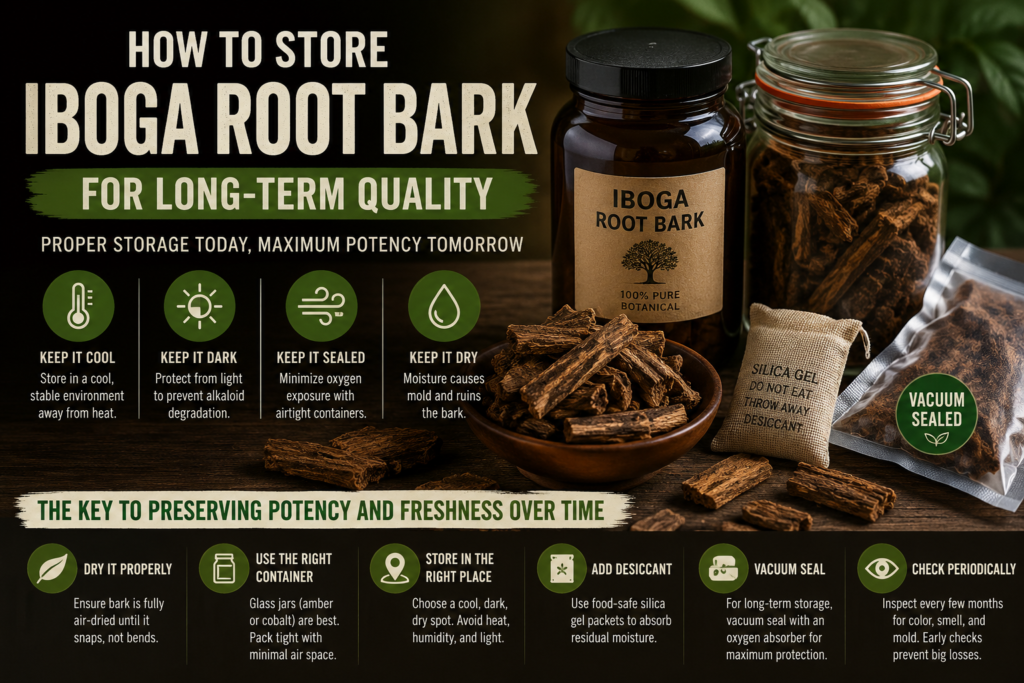
Iboga root bark loses potency faster than most people expect. A batch that looked fine at purchase can turn dull, dusty, and weak within a year if it sits in the wrong container or the wrong corner of a house. The bark itself is tough and fibrous, so it doesn’t visibly rot the way a leaf or a root vegetable would. That toughness is deceptive. The alkaloid content inside starts degrading from the moment the bark is harvested, and storage conditions decide how much of that degradation can be slowed.
This guide covers the practical side of keeping root bark in good condition for months or years, based on how botanical alkaloids actually break down.
Why Storage Conditions Matter So Much
Alkaloids are organic compounds, and organic compounds break down under heat, light, oxygen, and moisture. Iboga root bark is no exception. Four things drive quality loss:
- Heat speeds up chemical breakdown. A shelf above a heater or a garage that swings from cold to hot each day ages bark faster than a stable, cool room.
- Light such as sunlight directly on it will degrade plants through photolysis. This is why herbalists have used dark glass jars for centuries.
- Oxygen reacts slowly with compounds in the bark, oxidizing them over time.
- Moisture invites mold. Root bark is dense enough that surface mold isn’t always obvious until you break a piece open.
Heat and light together do more damage than either one alone, which is why the storage advice below layers multiple protections rather than relying on just one.
Drying the Bark Properly Before Storage
Long-term storage starts before the bark goes into a container. If it wasn’t dried all the way through at the point of purchase, no storage method will save it. Bark that still holds internal moisture molds from the inside out, and by the time you notice a smell, the damage has already spread.
Properly dried bark snaps rather than bends. If a piece feels leathery or flexes without breaking, give it more drying time in a well-ventilated, shaded space before storing it. Rushing this with direct heat (an oven, a dehydrator set too hot) can cook off the compounds you’re trying to preserve, so air drying at room temperature is the safer route even though it takes longer.
Choosing the Right Container
Glass is the standard choice for a reason. It doesn’t leach chemicals, doesn’t hold onto odors from previous contents, and can be made airtight with the right lid. Amber or cobalt jars block far more light than clear glass, which matters if the storage spot isn’t fully dark.
Plastic containers work in a pinch but come with tradeoffs. Some plastics allow slow gas exchange, undermining the point of sealing bark away from oxygen. Plastic also picks up static that attracts fine bark dust, making the jar messier to handle over time.
Whatever container you choose, pack it so there’s minimal air space at the top. A jar that’s mostly full ages more slowly than one with a lot of headspace, since there’s less oxygen trapped inside with the bark.
Where to Keep It
A cool, dark cupboard or pantry works better than a kitchen shelf near a stove or a windowsill. Basements can be a good option if they’re dry; damp basements are not, since humidity swings undo the drying work done earlier.
Some people store bark in the refrigerator, which can help in hot climates, but it introduces condensation. Moving a cold jar in and out repeatedly creates moisture inside the container each time it warms back up. If refrigeration is necessary, keep the jar in place rather than pulling it out often, and let it return fully to room temperature before opening.
Using Desiccants and Vacuum Sealing
A small food-safe silica gel packet inside the jar absorbs residual moisture without touching the bark directly, a low-effort addition that pairs well with glass storage.
For bark you don’t plan to touch for a year or more, vacuum sealing in mylar bags removes most of the oxygen before it reaches the final container. Paired with an oxygen absorber packet, this slows oxidation far more than a jar alone. It takes more setup than a simple glass jar, so it suits larger quantities set aside for long-term keeping rather than bark in regular use.
Checking on Stored Bark Over Time
Inspect stored bark every few months rather than assuming it’s fine once sealed away. Look for a shift in color toward gray or a musty smell, both signs that moisture got in somewhere. Bark that’s still firm, holds its original color, and smells earthy rather than sour is aging well.
Long-term quality isn’t about one perfect storage trick. The correct drying, airtight dark container, stable cool location and the odd poke are what keep the root bark good year after year.