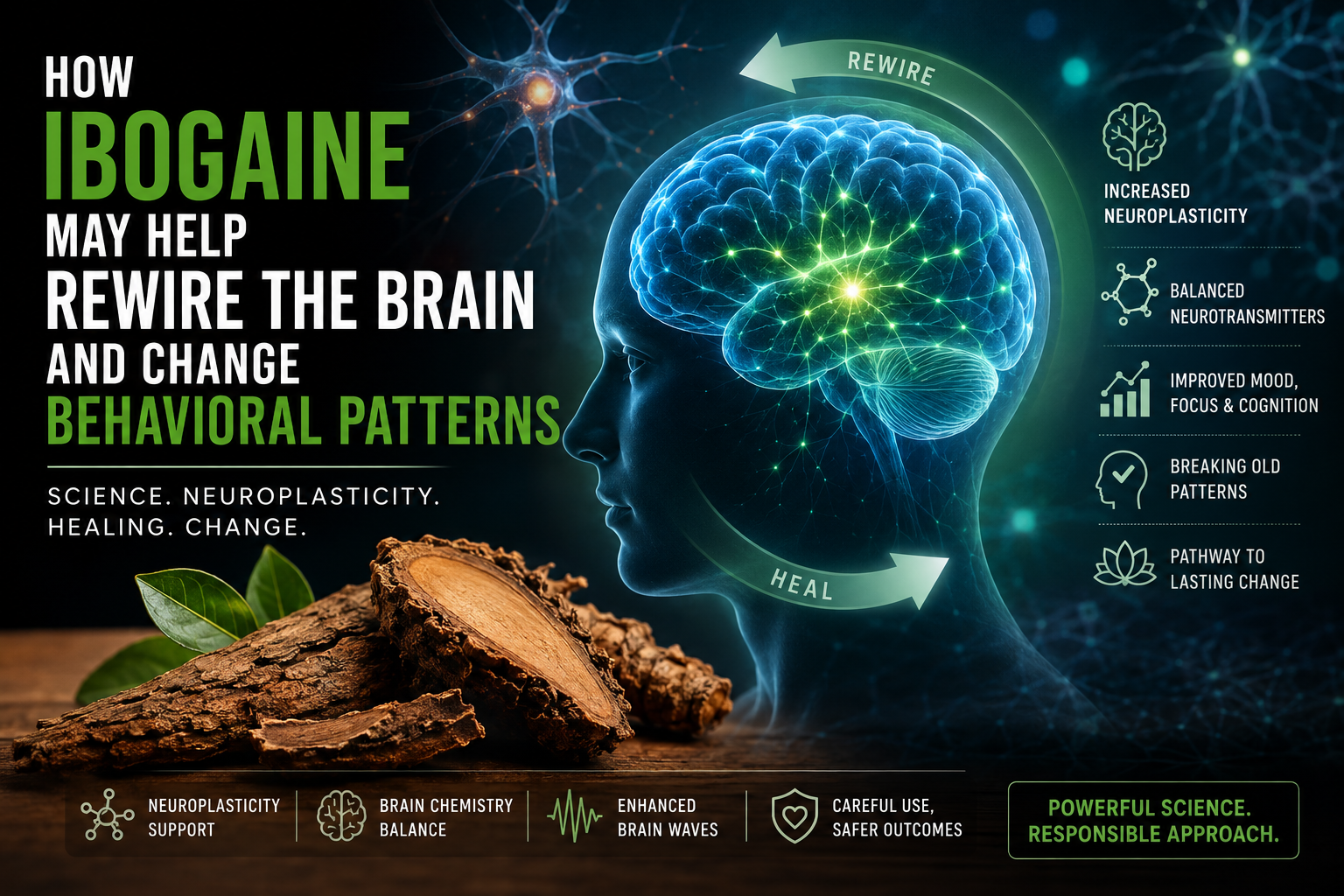
How Ibogaine May Help Rewire the Brain and Change Behavioral Patterns
If you’ve spent any time reading about emerging treatments for addiction or stubborn mental health conditions, ibogaine has probably crossed your radar. It shows up again and again next to words like “reset,” “rewiring,” and “breakthrough.” So what’s actually going on in the brain when someone takes it? And why are researchers, veterans’ groups, and even a few state lawmakers suddenly paying close attention?
Let’s get into what the science says, minus the hype, and without brushing past the real risks.
What Is Ibogaine, Exactly?
Ibogaine comes from the root bark of Tabernanthe iboga, a shrub native to Central Africa, where it’s long been central to Bwiti spiritual ceremonies. Its story in the West starts in 1962, when a 19-year-old dealing with opioid dependence took ibogaine from a friend and, almost by accident, noticed his withdrawal symptoms and cravings melt away after just one dose. That anecdote is basically what launched decades of underground use, and eventually, serious scientific curiosity.
Ibogaine also behaves oddly depending on dose, unlike psychedelics people are more familiar with. A small amount acts more like a stimulant. A large “flood” dose produces an intense, dreamlike state that can stretch past 24 hours, far longer than a typical mushroom trip, which usually wraps up in six.
The “Rewiring” Idea: What’s Behind It
People throw around the phrase “rewiring the brain” a lot, so it’s worth slowing down and asking what that actually means. In neuroscience, the term is neuroplasticity, and it refers to the brain’s ability to build new connections between neurons and reshuffle existing pathways based on experience. This is the same mechanism at work when you pick up a new language, or when someone regains motor function after a stroke.
Here’s the connection to addiction: entrenched behavioral patterns, whether that’s substance use or something else, tend to form because the brain keeps reinforcing the same neural circuit over and over until it becomes automatic, even when it’s doing real damage. What ibogaine appears to do, at least based on current research, is interrupt that loop. Scientists point to a handful of overlapping mechanisms for why:
- BDNF and GDNF go up. Ibogaine, along with its main metabolite noribogaine, looks to raise levels of brain-derived neurotrophic factor and glial cell-derived neurotrophic factor. Both proteins help neurons grow, survive, and form stronger synaptic connections. Researchers sometimes call BDNF “fertilizer for the brain” for exactly this reason.
- Glutamate and dopamine shift. A 2025 review published in Frontiers in Pharmacology argued that ibogaine’s effect on glutamate and dopamine signaling in the brain’s reward circuitry could help reset how that system responds, not just for addiction, but potentially for OCD, PTSD, and eating disorders too, since all of these conditions share disrupted signaling in the same pathways.
- A wide net of receptors. Ibogaine touches NMDA, sigma-2, kappa-opioid, and serotonin receptors, among others. That’s an unusually broad target list, which may explain why effects hit mood, cravings, and cognition all at once.
- A bump in theta brain waves. Stanford Medicine researchers, publishing in Nature Mental Health, found veterans given ibogaine alongside magnesium (added for heart protection) showed increased theta activity on EEG a month later, a pattern tied to sharper cognitive flexibility.
That Stanford trial, part of the MISTIC study, followed 30 veterans with traumatic brain injury. Results were hard to ignore: better concentration, memory, and impulse control, plus a jump on a standard disability scale from mild-to-moderate disability down to essentially none, in just a month.
Why This Matters for Behavioral Change
Think of behavioral patterns, substance use, compulsive habits, trauma responses, as grooves worn into the brain over time. The idea behind ibogaine’s therapeutic potential is that it temporarily loosens those grooves while giving the brain more room to build new ones. That opens a window where old habits don’t feel quite so automatic, and healthier responses have a real shot at taking hold.
Ask people who’ve actually gone through ibogaine treatment, and most won’t describe it as a “high.” It’s closer to an intense, often emotionally rough journey through old memories and things left unresolved. A lot of them say the cravings that once felt unbeatable just… fade afterward. And researchers suspect that’s not purely psychological. It may reflect a genuine shift in how the brain’s reward and stress circuits are firing.
The Part You Shouldn’t Skip: Safety and Legal Status
Now for the part that deserves a healthy dose of realism. Ibogaine isn’t some low-risk supplement you pick up off a shelf, and right now, it isn’t legal for medical use anywhere in the United States. Federally, it’s still classified as a Schedule I substance, which means the FDA hasn’t approved it and no U.S. clinic can legally prescribe or administer it.
The biggest worry is the heart. Ibogaine prolongs the QTc interval, the timing of the heart’s electrical reset between beats, and when that stretches too far, it can trigger dangerous arrhythmias like torsades de pointes. Over the past few decades, ibogaine use has been linked to a number of deaths, most tied to unregulated facilities with little or no cardiac monitoring. Context matters here, though: a 2022 systematic review of 24 supervised clinical studies covering more than 700 participants found just two fatalities, both traced to specific protocol failures rather than the drug itself. Outcomes look very different with ECG monitoring, magnesium co-administration, and proper heart screening, versus informal settings with none of that.
There’s also a genetic wrinkle worth knowing about. People metabolize ibogaine differently depending on variations in the CYP2D6 enzyme, so some individuals face a higher risk of toxicity than others, even at doses that would be fine for someone else.
Things are shifting on the regulatory side, though slowly. A 2026 federal executive order pushed agencies to speed up psychedelic research funding, and states like Texas and Kentucky have committed tens of millions of dollars specifically toward ibogaine research. A few states are also exploring “Right to Try” pathways. For now, though, legal access mostly means clinical trials or licensed clinics abroad, in places like Mexico and Costa Rica. Anyone weighing treatment overseas should prioritize facilities with serious cardiac screening over whatever looks cheapest or most convenient.
The Bottom Line
Ibogaine sits at an unusual crossroads of old plant medicine and modern neuroscience. The evidence that it promotes neuroplasticity, boosts neurotrophic factors, and may help reset entrenched behavioral circuits keeps growing, and it’s coming from serious institutions like Stanford Medicine, not just anecdotes on forums. At the same time, the cardiac risks are just as real, and its legal status remains unsettled in most of the world.
If you or someone you care about is considering ibogaine for addiction or a related condition, the smartest first move isn’t booking a flight to a clinic. It’s talking to a medical professional, digging into the latest clinical trial data, and understanding exactly what cardiac screening and monitoring will look like beforehand. The brain’s capacity to rewire itself is genuinely remarkable, but anything powerful enough to do that deserves to be approached with real care.