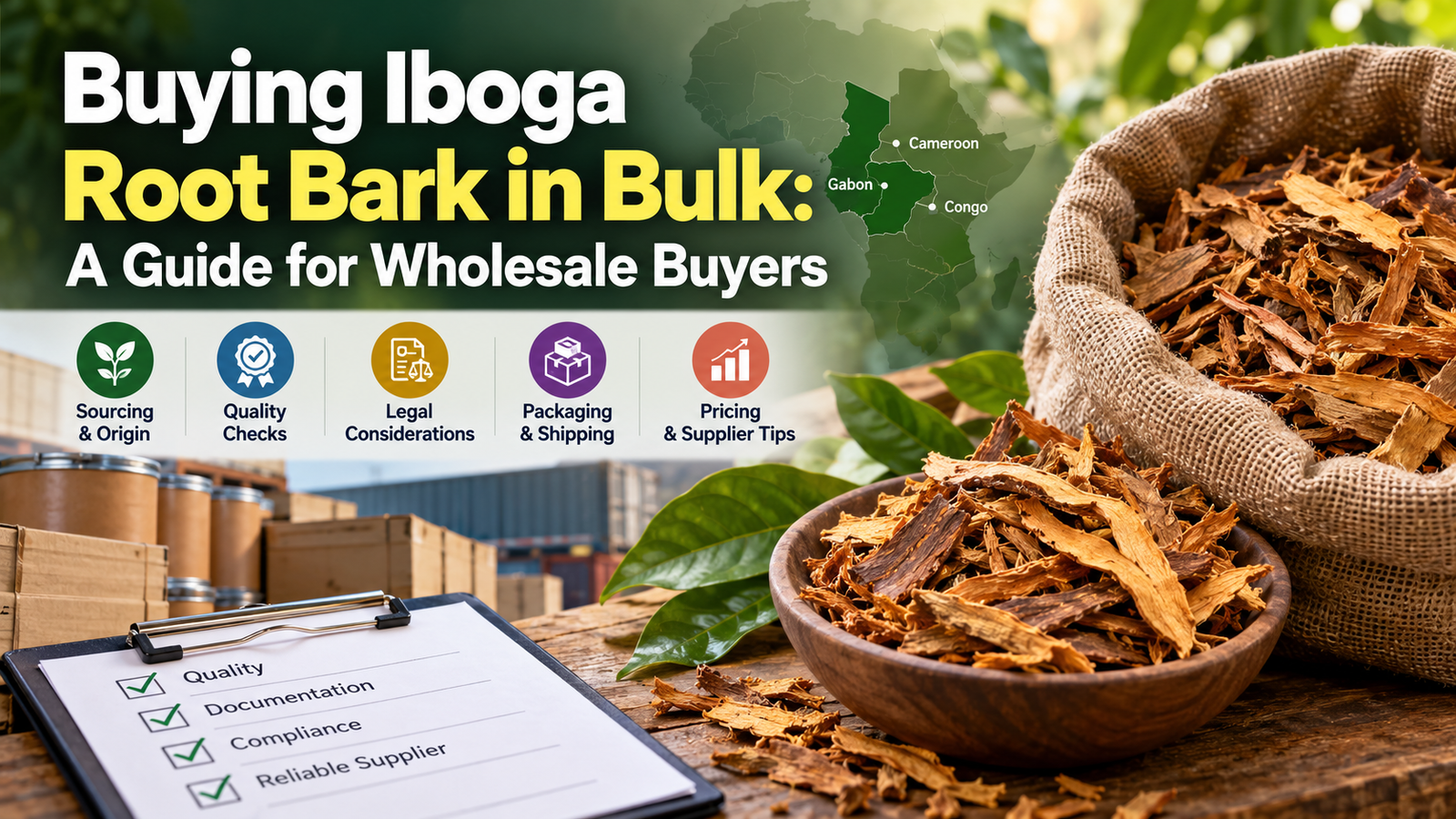
Buying Iboga Root Bark in Bulk: A Guide for Wholesale Buyers
Ask any botanical wholesaler what’s changed in the last few years and you’ll hear the same thing:
more people are asking about iboga root bark. More suppliers are offering it too, which sounds like
good news until you start comparing quotes. Prices swing wildly, photos look identical, and some
sellers cannot clearly explain where their bark came from.
Here’s a practical walk-through for anyone considering a bulk order of iboga root bark, covering
sourcing, quality checks, legal considerations, packaging, storage, and common purchasing mistakes.
A Quick Look at Iboga Root Bark
Tabernanthe iboga is a rainforest shrub native to Central Africa. It is particularly
associated with countries including Gabon, Cameroon and the Republic of the Congo. The root bark has
longstanding cultural significance among Bwiti communities in Gabon and should therefore be considered
in both its cultural and commercial context.
On the wholesale market, iboga root bark may be offered as shaved bark or in powdered form. Shaved
material can be easier to visually inspect because the physical characteristics of the bark remain
visible, whereas powder can make visual assessment more difficult.
Why Consider Buying Iboga Root Bark in Bulk?
For businesses handling recurring botanical inventory, larger orders can potentially provide more
consistent batches and reduce the frequency of individual shipments. However, bulk purchasing also
means committing more capital to inventory and requires careful planning around supply availability,
storage and applicable regulations.
Before placing a bulk order, buyers should verify applicable import, export, possession and
distribution requirements in every jurisdiction involved in the transaction.
Where Does the Bark Really Come From?
Origin and harvesting practices are important considerations when evaluating iboga root bark.
The plant grows slowly, and wild populations can be affected by overharvesting. Responsible buyers
should therefore ask suppliers about the source of the material and the documentation supporting
its origin.
Questions worth asking a supplier include:
- Where was the material harvested?
- Was it cultivated or collected from the wild?
- Can the supplier provide documentation relating to origin?
- Are applicable export and phytosanitary documents available?
- Can the supplier provide batch-specific quality documentation?
How to Check Quality Before You Commit
A representative sample can help a wholesale buyer evaluate the physical quality of a botanical
material before considering a larger order. Visual inspection alone, however, cannot establish
identity, purity or safety.
Visual Inspection
Examine the material for unusual discoloration, excessive dust, foreign plant material, visible
contamination or signs of poor handling.
Odour and Condition
Unusual sour, damp or musty odours can indicate improper storage or moisture exposure. Material
should be appropriately dried and stored to minimize the risk of deterioration.
Foreign Material
Check for excessive soil, wood fragments or other plant material. If a product is not exclusively
root bark, the supplier should clearly describe what is being supplied.
Laboratory Documentation
Where applicable, ask for a batch-specific certificate of analysis. Depending on the intended
market and applicable regulations, relevant testing may include botanical identity, microbiological
parameters, heavy metals, pesticides and other contaminants.
The Legal Bit — Don’t Skip It
Regulatory treatment of iboga and ibogaine varies considerably between countries and jurisdictions.
Ibogaine, one of the plant’s naturally occurring alkaloids, is controlled in a number of places,
while the legal status of raw plant material can differ depending on the jurisdiction.
Before importing, exporting, selling or possessing iboga root bark, buyers should independently
verify the current requirements applicable to their location and every country through which a
shipment may travel.
- Check current local laws and regulations.
- Verify import and export requirements.
- Determine whether permits or phytosanitary documents are required.
- Keep invoices, certificates and origin documentation.
- Consult an appropriate customs professional or lawyer when necessary.
- Avoid making medical or treatment claims unless legally permitted and properly substantiated.
Packaging, Shipping and Storage
For bulk botanical materials, appropriate moisture-resistant packaging and suitable secondary
protection can help reduce exposure to environmental conditions during transportation.
Each batch should ideally be identifiable through documentation such as a batch number, relevant
date information and declared weight. This can make traceability easier if a quality or logistics
issue occurs.
After receiving a shipment, store the material according to the supplier’s documented requirements
and applicable regulations. Inspect representative packaging promptly for signs of moisture,
contamination or damage.
Pricing and Payment Terms
Wholesale pricing can vary according to factors such as grade, form, origin, quantity, testing,
packaging and shipping arrangements. Comparing the complete landed cost is more useful than looking
only at the quoted price per kilogram.
Buyers should clarify what is included in a quotation, including testing, packaging, documentation,
insurance and shipping terms. Extremely low prices can warrant additional due diligence regarding
product identity, quality and provenance.
Picking an Iboga Root Bark Supplier You Can Trust
Supplier transparency is an important part of responsible wholesale sourcing. Look for clear
communication, consistent documentation and transparent information about product origin and
quality procedures.
- Does the supplier clearly explain the product’s origin?
- Can they provide relevant quality documentation?
- Are batch details available?
- Are applicable legal and shipping requirements discussed openly?
- Are product specifications consistent from one batch to another?
Final Thoughts
Buying iboga root bark in bulk requires more than comparing prices. Buyers should investigate
product origin, evaluate quality documentation, understand storage requirements and verify the
applicable regulations before entering into a transaction.
Careful due diligence can help wholesale buyers make more informed sourcing decisions and reduce
avoidable quality, documentation and compliance problems.