What Makes Iboga Different from Other Sacred Plants?
Walk into any conversation about plant medicine and you’ll hear the same names tossed around like they’re interchangeable. Ayahuasca, peyote, psilocybin mushrooms, iboga — people lump them together under one tidy label, “sacred plants,” as if swapping one for another is just a matter of preference. It isn’t. Anyone who has sat through an iboga ceremony, or even just researched the root bark seriously, knows this plant plays by its own rules. It doesn’t behave like the others, doesn’t ask the same things of you, and doesn’t leave you in the same place afterward.
Let’s get into what actually sets it apart.
The Timeline Is a Different Animal
Most plant medicine journeys have a shape you can predict. Psilocybin runs its course in four to six hours. Ayahuasca ceremonies typically wrap up in one long night. Even a heavy peyote experience settles by the next morning.
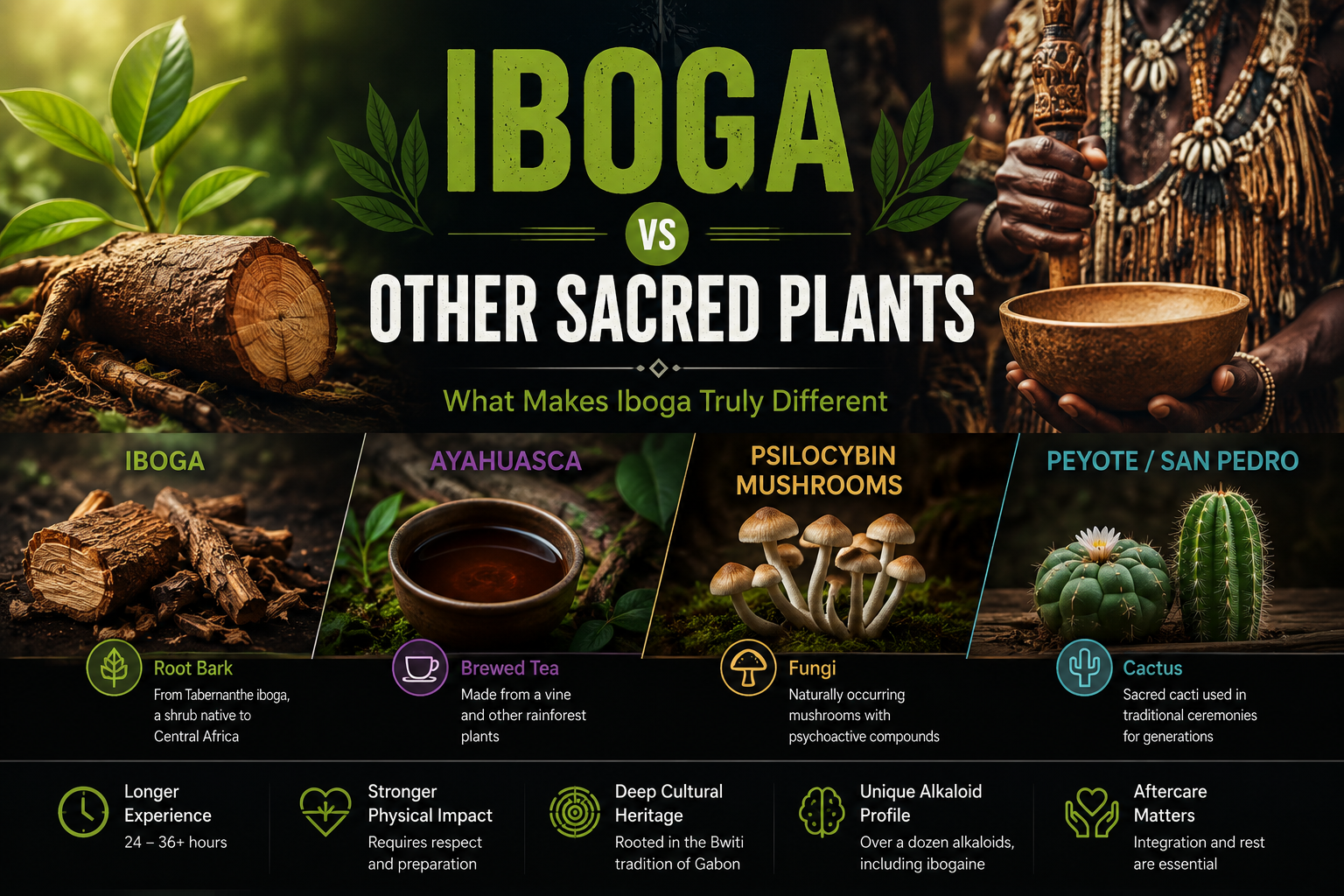
Iboga doesn’t work that way. A full flood dose can stretch the experience across 24 to 36 hours, sometimes longer depending on body weight and metabolism. There’s an acute phase where visions and introspection dominate, followed by a much quieter gray phase that can drag on for a full day. People often describe feeling caught between worlds during this stretch — not quite tripping anymore, but far from normal either. This isn’t a plant you fit into an evening. It asks for real time, real space, and real patience.
It Comes From Bark, Not Leaf or Mushroom
Ayahuasca is a brewed tea. Peyote and San Pedro are cacti, sliced and chewed or simmered. Psilocybin mushrooms are eaten more or less as they grow. Iboga is different at the source: the active material comes from the root bark of Tabernanthe iboga, a shrub native to Central Africa, primarily Gabon and Cameroon.
That root bark carries a dense alkaloid profile, with ibogaine as the most studied compound among more than a dozen alkaloids present. The plant’s chemistry doesn’t map neatly onto the classic psychedelic categories most people already know. Ibogaine interacts with the body in ways that resemble both a psychedelic and, oddly, something closer to a stimulant-sedative hybrid in its early hours. Researchers still debate exactly how all the mechanisms fit together.
The Physical Experience Hits Harder
Anyone who tells you iboga feels like a gentle plant journey either hasn’t taken it or is being generous with the truth. The body load is real. Nausea, muscle heaviness, and a kind of full-body immobilization are common, especially in the first several hours. Many people can’t walk without support during peak effects. Compare that to psilocybin, where physical side effects are usually mild, or even ayahuasca, where purging is common but the body generally stays mobile.
This is one reason serious iboga providers insist on medical screening beforehand, particularly heart health checks. The plant asks more of the cardiovascular system than most other traditional plant medicines, and that’s not something to treat casually.
Bwiti Tradition Has Its Own Cultural Architecture
Ayahuasca comes wrapped in Amazonian shamanic traditions built around icaros, the healing songs sung during ceremony. Peyote sits at the heart of Native American Church practices. Iboga has its own separate lineage entirely: the Bwiti spiritual tradition of Gabon, where initiation ceremonies using iboga root bark have existed for generations, tied to rites of passage, ancestral communication, and community bonding rather than casual exploration.
The Bwiti framework treats iboga less as a substance to experiment with and more as a threshold to be crossed under guidance, often involving extended preparation, fasting, and ceremonial structure that outsiders rarely see documented in full.
Why People Turn to It for Different Reasons
Here’s maybe the sharpest divide. People seek out ayahuasca or psilocybin mostly for insight, emotional processing, or spiritual connection. Iboga carries all of that too, but it’s also become known — particularly in its extracted ibogaine form — for interrupting opioid dependence and easing withdrawal symptoms. That reputation has pulled iboga into medical and addiction-recovery conversations in a way peyote or ayahuasca rarely enter.
This dual identity, part spiritual tool and part addiction interrupter, makes iboga occupy strange territory. It’s discussed in Bwiti temples and in harm-reduction clinics with almost equal seriousness, which isn’t something you can say about most other traditional plants.
Aftercare Isn’t Optional
Because the physical and psychological aftermath runs longer and heavier than most sacred plants, the days following an iboga experience matter as much as the experience itself. People often report lingering fatigue, emotional rawness, and a need for genuine rest that can extend well past what ayahuasca or peyote typically require.
The Bottom Line
Iboga isn’t a stronger ayahuasca or a longer mushroom trip. It’s its own tradition, chemistry, and physical experience, rooted in African soil and Bwiti practice rather than Amazonian or North American lineages. Understanding those differences matters, whether you’re researching out of curiosity or considering the path seriously. Respect for the plant starts with respecting how genuinely different it is from everything else people put in that same broad category.