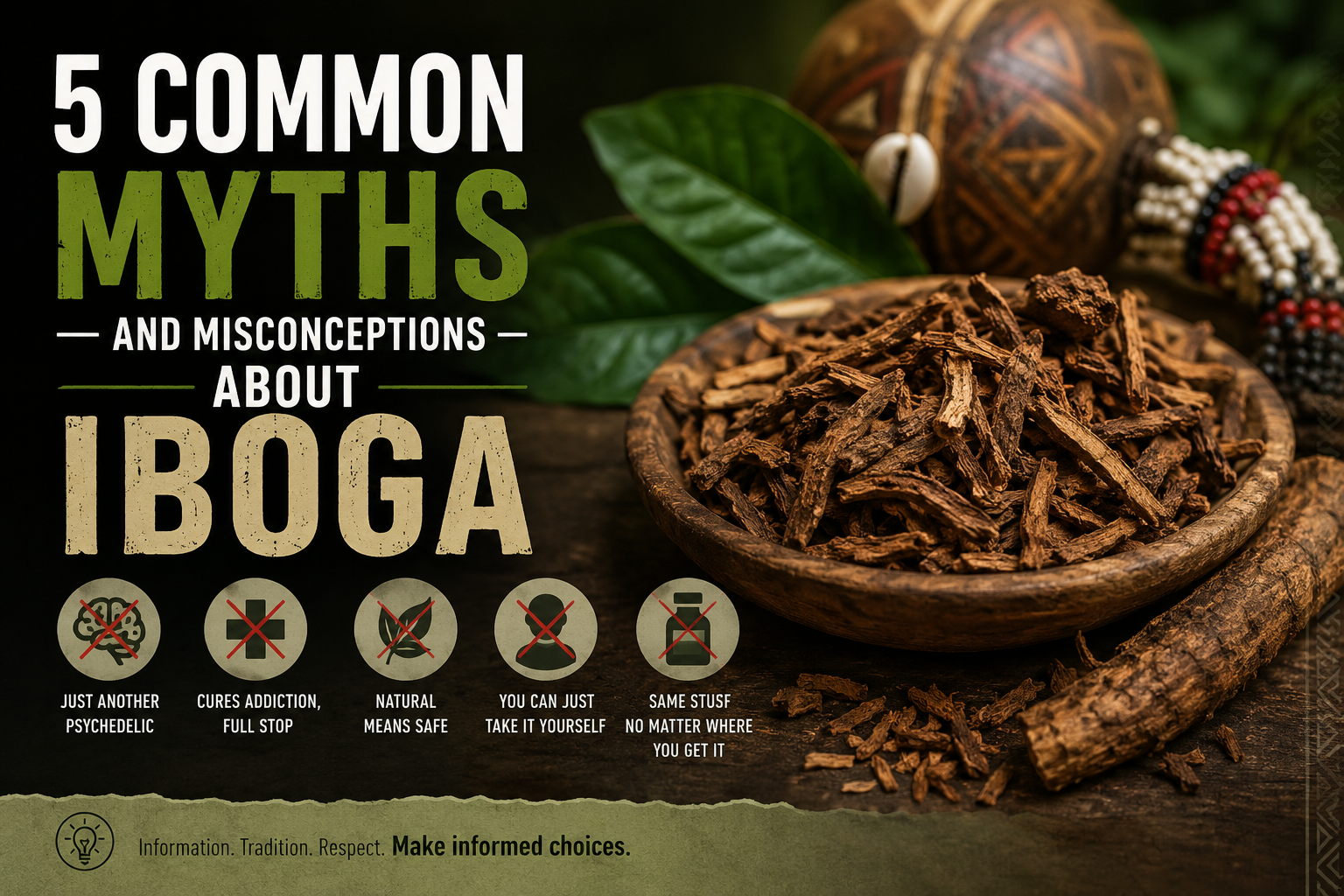
5 Common Myths and Misconceptions About Iboga
Ask five different people what Iboga actually is and you’ll probably get five different answers. A miracle cure. A dangerous drug. A spiritual sacrament. A festival substance. The internet has opinions, and most of them are only half right at best. So let’s actually sort through what’s true and what’s just gotten twisted along the way.
Myth 1: It’s basically just another psychedelic
People hear “psychoactive African root” and their brain files it next to mushrooms or LSD. Fair guess, wrong answer. Iboga isn’t something you take for a fun night out. The experience can stretch on for 24 hours or more, it’s physically taxing, and most people describe it as heavy, introspective, even exhausting rather than blissful. In its home context, the Bwiti tradition in Gabon, it’s used in initiation ceremonies, not casual settings. Calling it “just a psychedelic” is a bit like calling a hospital procedure a spa day because they both involve lying down.
Myth 2: It cures addiction, full stop
This one’s everywhere, and I get why. Recovery is hard, and a story about a root that resets your brain overnight is a story people want to believe. There’s real interest from researchers in how ibogaine seems to interrupt opioid withdrawal and cravings for some individuals, and that’s worth paying attention to. But addiction rarely has one cause, so it’s unlikely to have one fix. What tends to get left out of the viral version of this story is the aftercare — the therapy, the support systems, the actual work that happens once the initial effects wear off. Skip that part and you’re just left with hope and not much else.
Myth 3: Natural means safe
This logic shows up everywhere, not just with Iboga, and it falls apart just as fast every time. Poison ivy is natural. So is arsenic, technically. Ibogaine has a documented effect on heart rhythm, and there have been serious, sometimes fatal, complications tied to it — usually in people with existing heart conditions or those who combined it with other substances without medical screening first. None of this means it’s evil or should be feared. It means it deserves the same caution you’d give any substance that interacts with your body in a meaningful way.
Myth 4: You can just take it yourself
Somewhere along the way, the internet made it sound like Iboga is a self-guided experience — order some, read a forum post, you’re good. That’s not remotely how it works in the tradition it comes from. Bwiti ceremonies involve experienced guides who screen participants beforehand and stay with them through the entire process. That structure isn’t ceremonial fluff. It’s a safety mechanism built from generations of experience. Taking that away and doing it solo removes exactly the part that makes it survivable.
Myth 5: It’s the same stuff no matter where you get it
Here’s one people rarely think about. “Iboga” gets used as a catch-all term, but the raw root bark used in ceremony, purified ibogaine used in some clinical treatment programs, and random extracts sold online are not interchangeable products. Purity, dosage, and preparation vary wildly, and that variation matters enormously when you’re talking about something with real cardiac risk. Two people can both say they “took Iboga” and have had completely different experiences with completely different risk levels.
At the end of the day, Iboga is one of those things that resists a tidy explanation, and maybe that’s the honest takeaway here. It’s not the miracle everyone on social media claims, and it’s not some reckless danger either. It comes from a deep cultural tradition, it has documented physiological effects, and it carries real risk that shouldn’t be waved away just because it grows out of the ground instead of a lab.
If you’re actually curious about it, skip the forum threads and the dramatic YouTube titles. Look into the research, read about the Bwiti tradition it comes from, and talk to people who understand both the history and the risks. A plant with this much weight behind it deserves more than a five-minute scroll before you form an opinion.