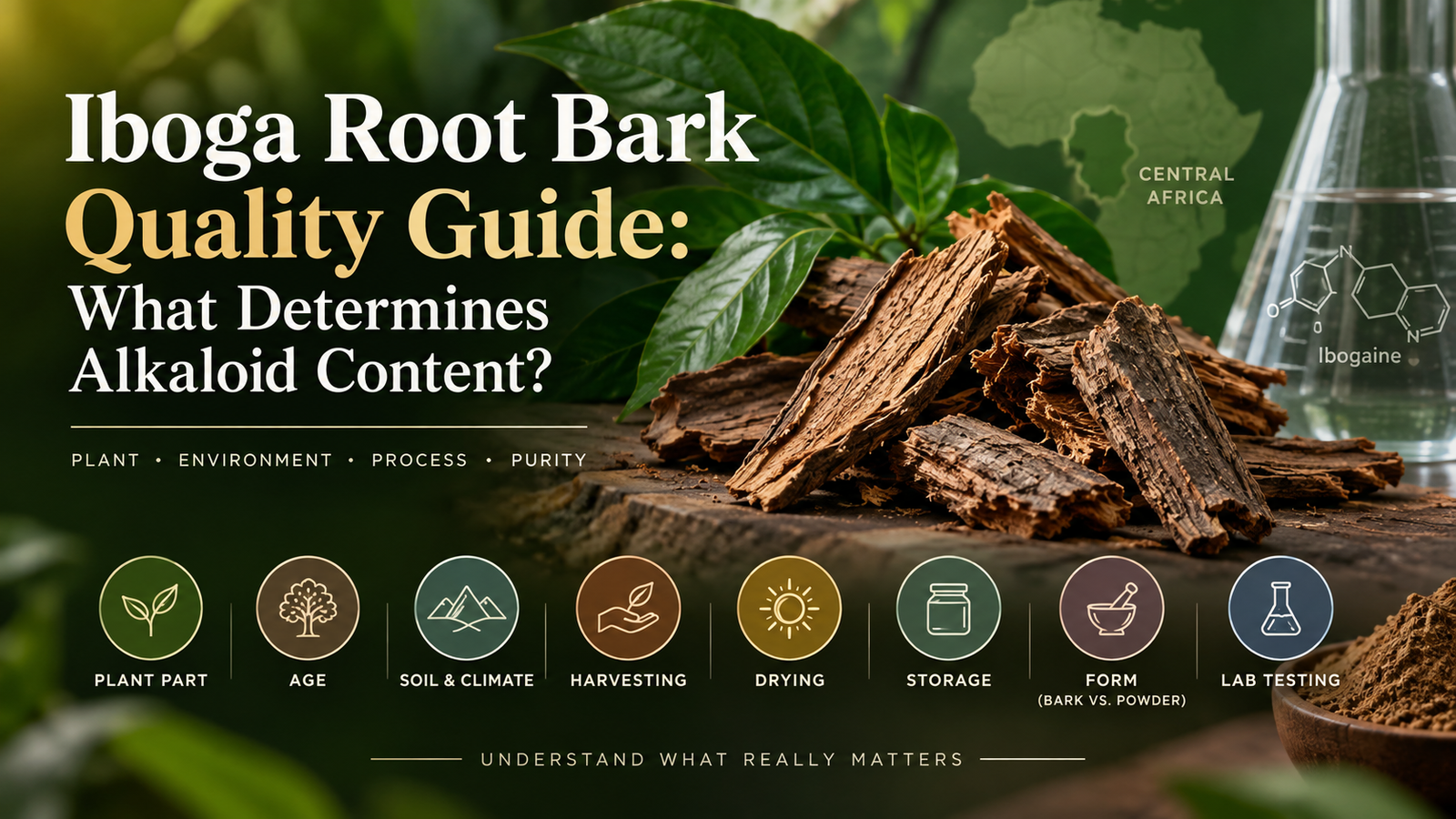
Iboga Root Bark Quality Guide: What Determines Alkaloid Content?
Spend a little time browsing iboga root bark listings and you’ll notice something odd: no two sellers describe quality the same way. One mentions “high potency,” another lists an origin country, and a few say almost nothing at all. So what’s actually going on beneath the surface? Why does one batch end up stronger than another that looks nearly identical?
Most of it comes down to alkaloid content, and a surprising number of factors shape it long before the bark ever gets sold. Here’s a practical breakdown of what actually matters.
Why Alkaloid Content Is the Real Quality Marker
Iboga root bark comes from Tabernanthe iboga, a shrub native to parts of Central Africa. People prize it mainly for its alkaloids, a family of compounds that includes ibogaine along with dozens of lesser-known relatives. When someone says a batch is “strong,” they’re really describing its alkaloid concentration and how those compounds are balanced against each other.
Here’s the tricky part: two samples can look exactly alike and still be worlds apart chemically. That’s the whole reason appearance tells you so little. You can’t eyeball alkaloid content — you have to understand what shapes it.
Visual appearance alone cannot reliably determine alkaloid concentration. Analytical testing is needed to establish the chemical profile of a sample.
The Part of the Plant You’re Using Actually Matters
Not every part of the iboga plant carries the same alkaloid load. Root bark is traditionally the plant material associated with the highest concentrations of these compounds, which explains why it is the part most commonly discussed in relation to alkaloid content.
Even within the root, chemical composition can vary between different tissues. Bark that has been separated cleanly from inner wood, without excessive pith or fibrous debris, can provide more consistent analytical results than poorly separated material.
The plant part and amount of unwanted plant material can influence the measured chemical composition of a sample.
Age Isn’t Just a Number
A young shrub hasn’t had the same amount of time to develop its root system as a mature plant. Iboga requires multiple seasons of growth, and material harvested at different stages of development may show differences in its chemical profile.
Growers concerned with consistency therefore have an incentive to consider plant maturity rather than harvesting solely according to a short production schedule. Plant age is one of several variables that can influence botanical composition.
Soil and Climate Play a Bigger Role Than You’d Guess
Like many plants that produce specialized natural compounds, iboga can respond to environmental conditions. Soil characteristics, rainfall, sunlight, temperature, and other growing conditions may influence plant development and the production of naturally occurring compounds.
Geographic origin can therefore provide useful context when evaluating botanical material. However, origin alone should not be treated as proof of potency or chemical quality. Laboratory analysis provides much stronger evidence about the actual composition of a particular batch.
Why Origin Matters
- Growing conditions differ between regions.
- Soil and climate can influence plant chemistry.
- Harvesting and processing practices may vary.
- Origin provides context but does not replace laboratory testing.
Harvesting Technique Can Make or Break a Batch
How root material is harvested can affect both the plant’s long-term survival and the physical integrity of the bark. Responsible harvesting practices can focus on minimizing unnecessary damage to the plant and reducing contamination of the harvested material.
Poor handling can introduce soil, foreign plant matter, or other contaminants. These factors may affect the cleanliness and consistency of the finished botanical material.
Drying Makes or Breaks What Comes Next
Once harvested, botanical material needs appropriate drying and handling. Excessive heat, prolonged direct sunlight, or uncontrolled humidity can affect naturally occurring compounds and may also create conditions favorable to deterioration or contamination.
Controlled drying and appropriate post-harvest handling are therefore important parts of quality assurance. Material can look acceptable while its chemical composition has changed because of poor processing or environmental exposure.
Good post-harvest handling should protect botanical material from excessive heat, moisture, light, contamination, and unnecessary environmental exposure.
Storage Isn’t a One-Time Decision
Botanical composition can change during storage. Light, heat, moisture, oxygen, and time can influence the stability of naturally occurring compounds.
Appropriate packaging and storage conditions can help protect botanical materials from environmental exposure. When evaluating a supplier, storage practices can therefore be an important part of overall quality assurance.
Whole Bark vs. Powder
Physical form can also affect storage characteristics. Powder has substantially more surface area exposed to environmental factors than intact or coarsely chopped material.
Greater surface area can increase exposure to oxygen, moisture, and light. Appropriate packaging and storage therefore become particularly important for powdered botanical material.
| Form | Storage Consideration |
|---|---|
| Whole Bark | Lower exposed surface area and generally easier to protect from environmental exposure. |
| Coarsely Chopped | Intermediate surface exposure; packaging and storage conditions remain important. |
| Fine Powder | Greater surface area means greater exposure to air and environmental conditions. |
Lab Testing Settles the Question
Many of the factors discussed above cannot be reliably evaluated with the naked eye. Laboratory analysis is therefore one of the most meaningful ways to determine the chemical composition of botanical material.
Independent laboratory testing can provide analytical information about iboga alkaloids and help distinguish measured chemical content from vague marketing descriptions such as “premium,” “high potency,” or “top shelf.”
What to Look for in Testing Documentation
- Identifiable laboratory or testing facility
- Clearly stated testing methodology
- Sample or batch identification
- Reported alkaloid measurements
- Testing date and relevant quality-control information
A Quick Word on Safety and Legality
Important: Iboga and ibogaine are associated with significant safety concerns, including potentially serious cardiac effects. Legal status also varies substantially between countries and jurisdictions.
Anyone considering iboga or ibogaine for personal, therapeutic, or other purposes should research applicable laws and seek appropriate medical guidance. Commercial availability does not necessarily mean that a product is legal or medically safe to use.
Wrapping Up
Alkaloid content in iboga root bark doesn’t come down to one single factor. It can be influenced by the plant’s developmental stage, growing environment, plant material selected, harvesting practices, post-harvest handling, and storage conditions.
Once you understand these variables, judging quality by price or appearance alone becomes much less reliable. Laboratory-verified information provides a far stronger basis for evaluating the chemical composition and consistency of botanical material.
The Bottom Line
Appearance and marketing claims cannot establish alkaloid content. When chemical composition matters, reliable laboratory analysis and responsible sourcing are far more meaningful indicators of quality.