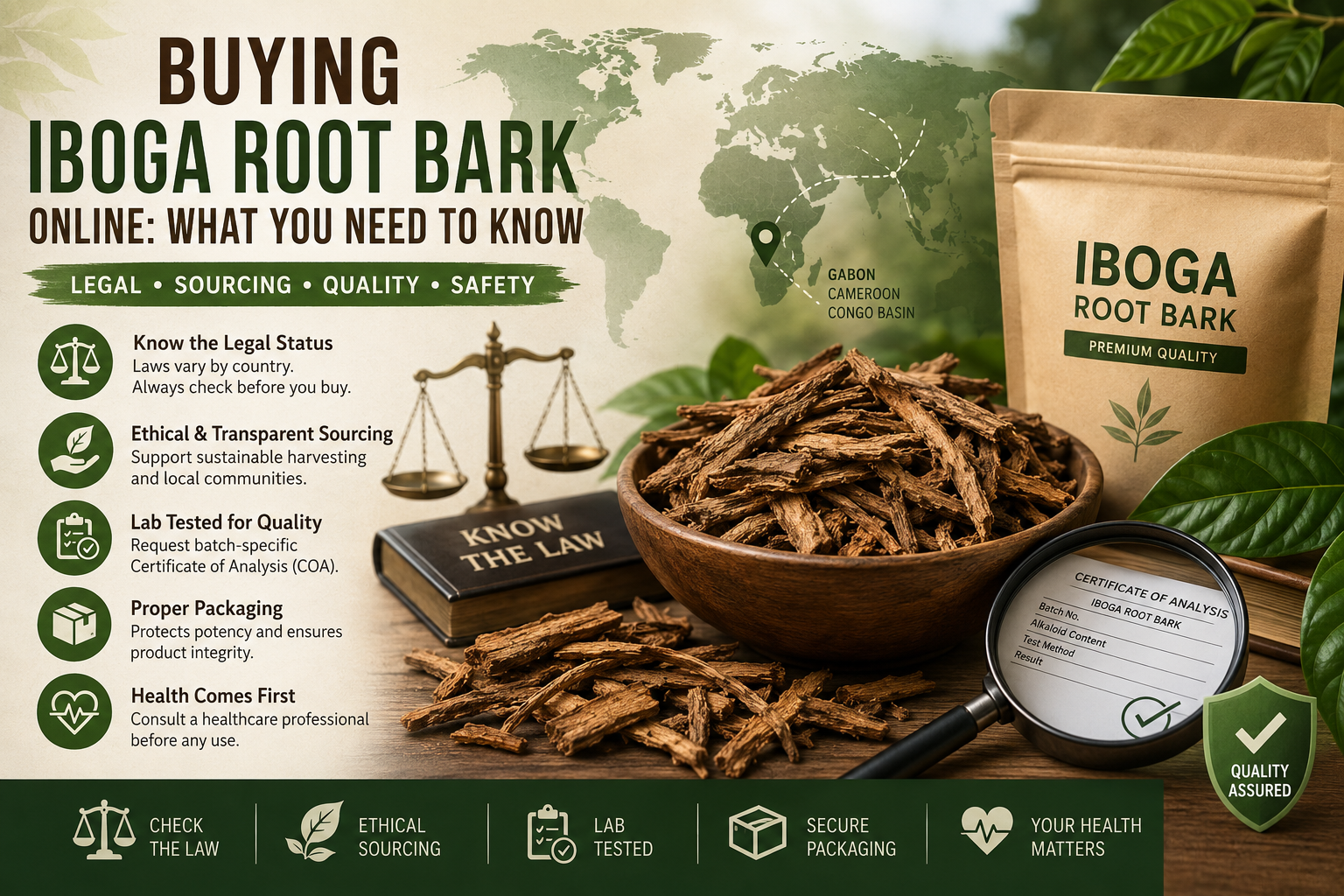
Shopping for iboga root bark online isn’t like ordering everyday herbal products. It is a traditional botanical with deep roots in West African culture, and purchasing it requires careful attention to legality, sourcing, quality, and safety. Before placing an order, take the time to understand the factors that separate reputable suppliers from questionable ones.
Understand the Legal Status Before Buying
The first step is to verify whether iboga root bark is legal in your country. Regulations differ significantly around the world, and laws may change over time.
- Research your country’s latest laws regarding iboga and ibogaine.
- Do not rely on outdated online information.
- If you’re uncertain, consult a qualified legal professional.
- Be cautious of sellers claiming the product is legal everywhere—this is a major warning sign.
Choose a Seller With Transparent Sourcing
Iboga (Tabernanthe iboga) naturally grows in Gabon, Cameroon, and parts of the Congo Basin. Due to increasing demand, sustainable harvesting practices have become increasingly important.
A trustworthy supplier should clearly explain:
- Where the root bark originates.
- Whether it is wild-harvested or cultivated.
- How harvesting is carried out sustainably.
- Whether local communities benefit from the sourcing process.
Generic statements such as “ethically sourced” without supporting information should encourage further questions before making a purchase.
Verify Independent Laboratory Testing
The natural alkaloid content of iboga root bark varies depending on growing conditions, harvesting methods, and storage. Reliable vendors should provide batch-specific laboratory testing whenever possible.
- Batch-specific Certificate of Analysis (COA).
- Laboratory identification matching your purchased batch.
- Testing that is current rather than a generic document reused across products.
If a seller cannot provide documentation upon request, consider it an important factor during your evaluation.
Understand Different Forms of Iboga Root Bark
Not all iboga root bark products are identical. The plant material may differ depending on which part of the root is harvested and how it has been processed.
| Product Form | What to Know |
|---|---|
| Whole Root Bark | Offers the highest level of visual inspection and authenticity. |
| Shredded Bark | Provides a balance between convenience and transparency. |
| Powdered Bark | More difficult to visually verify and generally easier to adulterate. |
Examine product photos carefully. Genuine root bark typically has a fibrous appearance with relatively consistent texture and coloration.
Evaluate Customer Reviews Carefully
Reviews can provide valuable insight, but quality matters more than quantity.
- Look for detailed descriptions rather than simple five-star ratings.
- Pay attention to comments about packaging, freshness, appearance, and communication.
- Check independent discussion forums in addition to reviews displayed on the seller’s website.
- Be cautious of listings containing only generic praise without meaningful details.
Packaging and Storage Matter
Proper packaging helps preserve the quality of dried root bark during storage and shipping.
- Vacuum-sealed packaging.
- Opaque materials that reduce light exposure.
- Protection from moisture.
- Clear storage recommendations.
You may also ask the supplier how the product was stored before shipment and how long it remained in inventory.
Important Health Considerations
Health and Safety Notice
Ibogaine has been associated with potentially serious effects on heart rhythm, and medical literature has reported severe adverse events, including fatalities, particularly among individuals with underlying cardiac conditions or when combined with certain medications.
Before considering any use of iboga products, consult a qualified healthcare professional. No online seller can evaluate your personal medical history or determine whether a product is appropriate for you.
Final Thoughts
Buying iboga root bark online requires more than comparing prices. Responsible buyers should verify local regulations, research supplier transparency, request laboratory documentation, evaluate product quality, review packaging standards, and carefully consider health-related risks.
Taking the time to perform thorough research helps ensure you make an informed purchasing decision while choosing a supplier that prioritizes transparency, quality, and responsible sourcing.