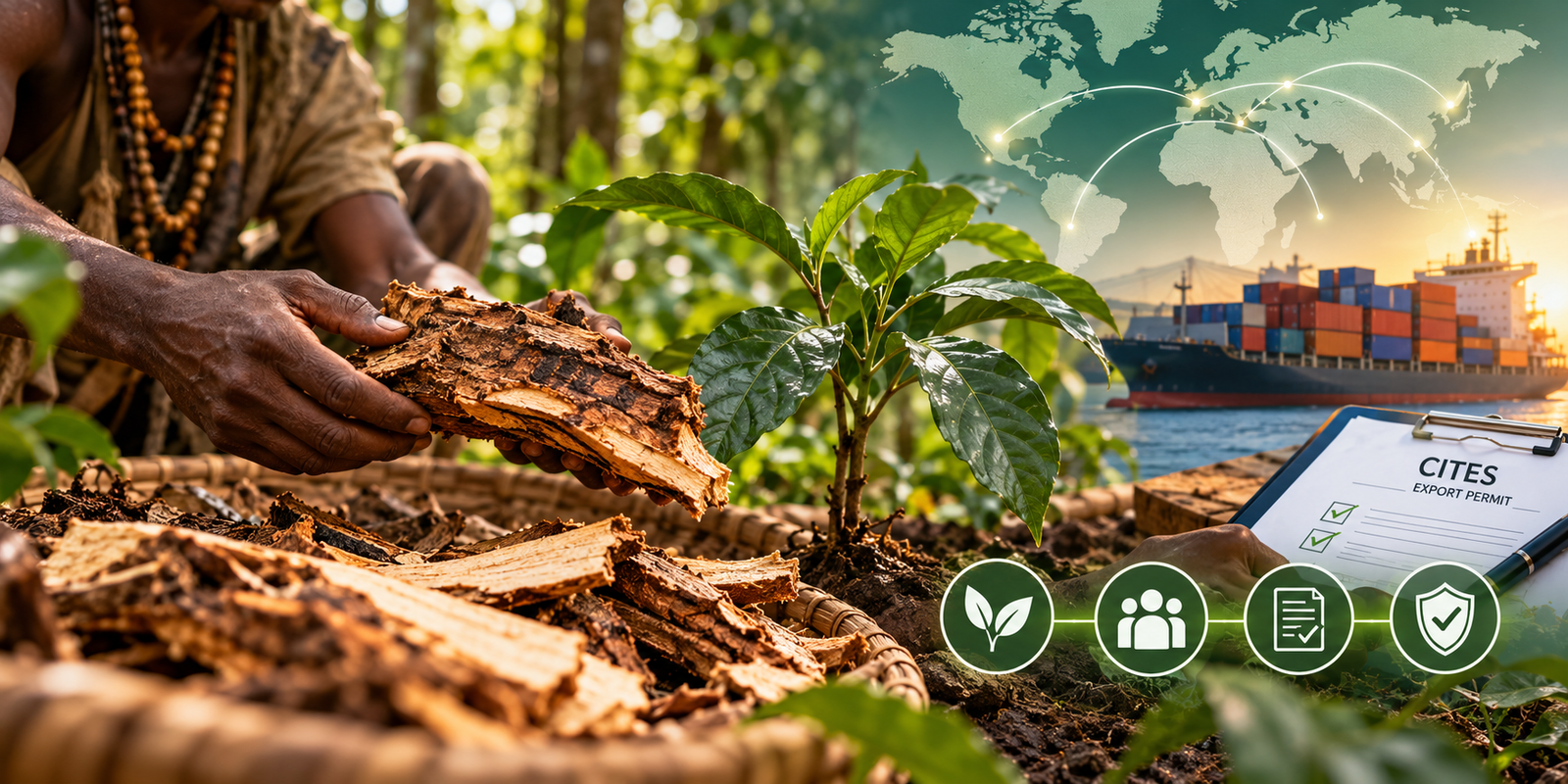
Why Ethical Sourcing Matters in the International Iboga Supply Chain
Iboga grows slowly, it lives in a small corner of the world, and for generations it has belonged to the people who live beside it. Now it is travelling far beyond the villages where it started. As global interest rises, the iboga supply chain is being stretched in ways that neither the plant nor the local communities were ready for. If you buy, sell, or write about iboga, how it gets from forest to shelf deserves your attention. This post explains why ethical sourcing matters and what it looks like in practice.
What Makes the Iboga Supply Chain So Different?
Iboga (Tabernanthe iboga) is a rainforest shrub native to Gabon, Cameroon, and the Republic of Congo. It sits at the heart of the Bwiti spiritual tradition, where it has long been part of initiation rites. Most of the bark people want comes from the roots, and a plant needs several years to mature before anyone should touch it.
That slow pace changes everything. A farmer can plant more sunflowers when demand jumps, but nobody can hurry a forest shrub. Any iboga supply chain built on fast growth and quick profit is heading for a wall, and that wall is usually a depleted forest.
Conservation Comes First
In late 2022, CITES member countries agreed to list iboga in Appendix II. In plain terms, that means international trade is now monitored and needs proper permits. The decision followed concerns about overharvesting and forest loss, both of which have put wild populations under pressure.
For buyers, that makes one question hard to avoid: where did this material come from? An ethical iboga supply chain can answer it clearly. It shows whether the bark was wild-collected or grown on a plantation, and whether harvesters left enough of the plant behind for it to recover. Cultivation and careful harvesting take pressure off wild stands. Cutting corners does the opposite.
Fair Pay and Respect for Local Communities
Conservation is only half the story. People are the other half. The knowledge around iboga was not invented in a lab. It was built over many generations by communities in Central Africa. Gabon and other range countries have been working on access and benefit-sharing rules, in the spirit of the Nagoya Protocol, so that those communities share in the value created from their biological heritage.
On the ground, things can look very different. Harvesters often earn a small slice of the final price, while margins grow with every step away from the forest. A fair iboga supply chain pays collectors a decent rate, puts agreements in writing, and respects traditional ownership. That is not charity. People who earn fairly have a real reason to protect the forest instead of stripping it.
Staying on the Right Side of the Law
Rules around iboga differ a lot from one country to another. Some places restrict the plant or its alkaloids, others regulate it through permits and import conditions, and CITES paperwork now applies to cross-border trade on top of that. Businesses that ignore this risk seized shipments, fines, and damaged relationships. A well-run iboga supply chain keeps export permits, import licenses, and invoices lined up, so every shipment can be explained from start to finish. Rules change often, so check with a trade or legal professional in your own country before shipping anything.
Traceability Protects Quality, Too
Ethical sourcing is a quality question as well. Poorly handled material can be mislabeled, mixed with other plant matter, or contaminated during drying and storage. Without records, nobody can say where the problem began. Good traceability fixes that. Batch numbers, harvest locations, dates, and handler details create a trail you can follow in both directions. When the iboga supply chain is transparent, problems get caught early and customers have a reason to trust what they are buying.
How to Spot an Ethical Partner in the Iboga Supply Chain
You do not need to be an expert to ask good questions. Start with these:
- Can they show proof of origin, export permits, and CITES documents?
- Is the material cultivated or wild-harvested, and how do they manage regrowth?
- How are harvesters paid, and is there a written agreement?
- Do they provide batch records and independent lab testing?
- Are the prices realistic? A price far below market usually means someone along the chain is covering the difference.
A supplier who answers openly is a good sign. One who dodges the questions tells you something too.
Why an Ethical Iboga Supply Chain Pays Off
Doing the right thing is also a practical choice. Buyers are more informed than they used to be, and many now ask about origin before they ask about price. A business with a clean iboga supply chain earns trust, avoids legal headaches, and has a better shot at steady supply, because the forests and communities behind it stay healthy. Shortcuts might look cheaper this quarter, but they tend to get expensive later.
Final Thoughts on Responsible Iboga Sourcing
The international iboga supply chain will keep growing as more people take an interest in this plant. Whether it grows in a healthy way is up to the people who buy, sell, and regulate it. Ethical sourcing protects the forests, rewards the communities who know the plant best, and keeps trade on the right side of the law. If you are building relationships in the iboga supply chain, ask questions, request documents, and walk away from anyone who will not answer them. A transparent iboga supply chain is better for everyone involved, and it is the only kind that can last. Choose partners who treat the iboga supply chain as something to look after, not just something to sell.