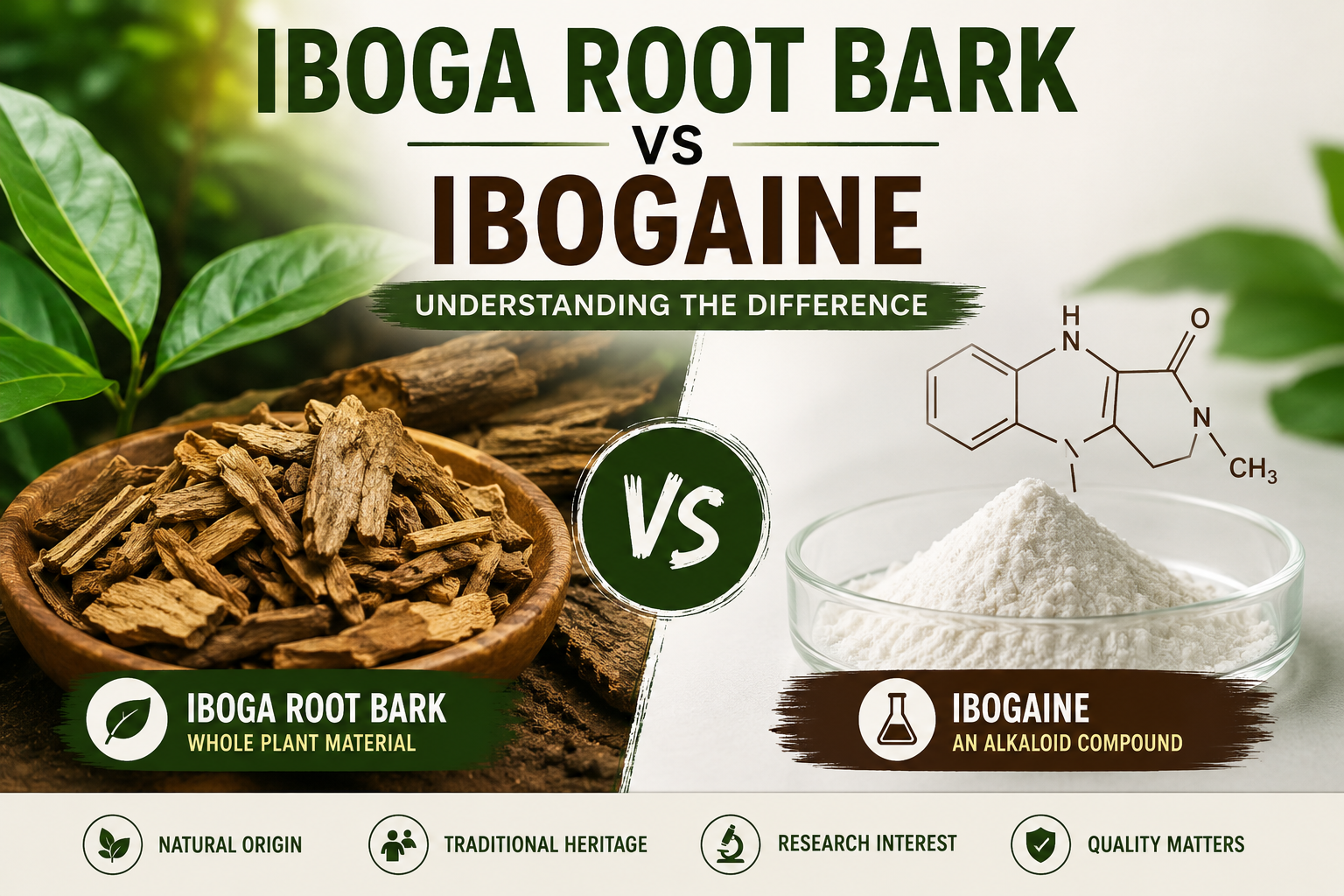
Iboga Root Bark vs Ibogaine: Understanding the Difference
Introduction
For anyone who has taken the time to research Iboga Root Bark chances are they will also hear the term Ibogaine used at the same time. In fact most people seem to consider them to be the same thing due to the close relationship between the two. However while they are related, Iboga Root Bark and Ibogaine are not actually the same thing and knowing the difference between the two will help researchers, ethnobotanists and other curious parties to learn more about the origin and make up of this remarkable African plant.
While Iboga is receiving attention all over the world due to its fascinating properties and history within the traditional central African cultures, Ibogaine has risen to be one of the most spoken about substances found in the natural world and can be found in the natural world within the root of the Iboga plant. This article describes exactly what both terms mean as well as the relationship that the two share and why it is beneficial for all involved to know the difference between the two.
What Is Iboga Root Bark?
The Iboga Root Bark is derived from the root of Tabernanthe iboga, a woody shrub native to the tropical rainforests of Central Africa. This plant is most commonly found in countries like Gabon, Cameroon, Republic of the Congo and the Republic of the Congo. It is widely used in those countries.
The Iboga Root Bark is typically sourced from adult plants, harvested in traditional ways and then processed so that it retains its natural characteristics as much as possible. It may be presented in one of many ways, dependent on its intended purpose:
- Whole Root Bark
- Shredded Root Bark
- Ground Root Bark
One of the key features of Iboga Root Bark is that it is a natural plant product. It is comprised of many different naturally occurring chemical compounds including various alkaloids and plant compounds that give it a unique make up.
What Is Ibogaine?
Ibogaine is one of the naturally produced alkaloids present within the Iboga plant, it is thought to be one of the most identified of all the constituents in Tabernanthe iboga and has generated considerable research interest throughout the years.
In contrast to the Iboga Root Bark which comprises a variety of naturally produced compounds, Ibogaine specifically refers to an individual alkaloid and is one of the many components of the root bark and the overall plant as a whole.
Often in the study of the Iboga plant’s chemical structure, research is performed on the specific chemical Ibogaine. However, one must remember that there are many more alkaloids that naturally occur in the root bark along side Ibogaine.
Understanding the Relationship Between Iboga Root Bark and Ibogaine
Another way to easily grasp the distinction between the two would be to compare whole fruit vs one its specific nutrients.
Example
A fruit like an Orange contains Vitamin C, as well as fiber, antioxidants and countless other compounds occurring in nature.
Vitamin C is simply one isolated element in that fruit.
In the same manner:
- Iboga Root Bark contains many compounds and alkaloids in the state of nature.
- Ibogaine is simply an alkaloid that can be naturally extracted from that bark.
I am hoping this clear comparison explains why the two words are commonly referred together but distinct.
Key Differences Between Iboga Root Bark and Ibogaine
1. Whole Plant Material vs Individual Compound
The primary difference is that the Iboga Root Bark is the entire, whole plant material, whereas Ibogaine is just one compound found within the plant material.
The Iboga root bark consists of many natural occurring substances. Ibogaine refers only to one specific compound.
2. Natural Composition
Iboga Root Bark contains the entire alkaloid spectrum of the plant. The total amount of naturally occurring elements which exist simultaneously within the root structure. Ibogaine is just one constituent of that entire collection.
3. Processing Requirements
Typically Iboga Root Bark goes through:
- Harvesting
- Cleaning
- Drying
- Shredding
- Packing
Typically Ibogaine undergoes more processing such as Extraction and Isolation processes.
4. Traditional Significance
Traditionally, in the indigenous cultures of Central Africa the natural root bark of the plant has been utilized. Iboga is steeped in history that relates the culture back to the natural plant not single chemical entities.
Why Quality Matters in Iboga Root Bark
Not all Iboga Root Bark is of equal quality, there are a variety of elements which can affect it:
- The age of the plant
- Harvesting
- Drying process
- Storage
- Processing techniques
- Supplier credibility
Older plants are usually said to have a more developed and stronger alkaloid content than younger ones, as are properly prepared samples when correctly harvested.
It is important to purchase botanical items from reputable and reliable suppliers, particularly ones that are careful about quality control.
Sustainable Harvesting and Ethical Sourcing
Now that interest in ethno-botanical plants is reaching its peak worldwide, the importance of sustainability has been highly emphasized. It is responsible harvest which can guarantee the future of wild Iboga populations as well as supply the people who have retained the knowledge of Iboga for millennia.
Responsible harvest ensures that the natural environment stays in balance for future generations to enjoy the Iboga. Most ethical dealers will deal with harvesters directly, utilizing harvesting practices that allow nature to replenish itself.
Frequently Asked Questions
Is Ibogaine naturally present in Iboga Root Bark?
Yes. Ibogaine is an alkaloid that occurs naturally and it is one of the many different compounds that can be found within Iboga Root Bark.
Are Iboga Root Bark and Ibogaine the same thing?
No. The plant material as a whole is called Iboga Root Bark and Ibogaine is one alkaloid contained within the plant.
Why are the terms often used interchangeably?
Since Ibogaine is derived from the Iboga plant, the two terms are often used incorrectly as though they were the same thing.
What makes Iboga Root Bark unique?
With its profound alkaloid composition and cultural importance and heritage among Central African ethnobotanical systems, it is one of the most unusual plant species in the world.
Conclusion
They are mentioned in the same breath frequently, though Ibogaine and Iboga Root Bark are not the same thing. Iboga Root Bark refers to the actual plant matter from the Tabernanthe iboga’s roots and its naturally occurring constituents. Ibogaine is one specific chemical compound, an alkaloid, which is found within that Iboga root bark.
Understanding the difference between the two gives one a greater insight into the botanical makeup of the Iboga, the plant’s history within tradition and its increasing exploration by research scientists and ethnobotanists. If you are new to this topic and would like to learn more about the botanical practices of the Africans, the distinction between Ibogaine and Iboga Root Bark is key to gaining further insight into this intriguing plant.